Car towing: rules for calling the service, procedure, and tips for the driver
A vehicle may need towing in the event of a breakdown, an accident, or illegal parking, as well as in situations where further movement is unsafe or prohibited.
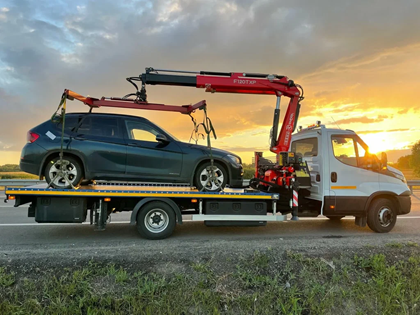
It’s important to know the basic rules for calling a tow truck, the paperwork, and your rights in advance to avoid unnecessary expenses and disputes on the road.
This article contains practical recommendations: how to prepare your car for loading, what to check before transporting it, what to clarify with the towing service, and what to do if your car has already been towed. We’ll also discuss where to find current requirements and contact information for vehicle towing on the website to quickly make the right decision.
When a car can be towed to an impound lot: specific grounds and controversial situations
Vehicle towing to an impound lot is not used for every violation, but only in cases where the law specifically permits the vehicle’s detention. This is usually due to a safety threat, obstruction of traffic, or the inability to legally continue driving.
It’s important to understand the difference between a fine and a detention: a fine can be issued for virtually any violation, while towing is an additional measure requiring specific conditions. Below are the most common grounds and situations that often cause controversy.
Grounds for towing: when detention is considered legal
In practice, towing most often occurs due to stopping/parking violations and situations where the driver cannot legally continue driving. The most common grounds for detention include:
- Stopping or parking in places where it is prohibited and creates an obstacle to traffic (e.g., on a roadway when it is actually obstructing passage).
- Parking in disabled spaces without legal grounds (in the absence of supporting documents/signs, if required).
- Stopping/parking on a pedestrian crossing or closer than the established distance to it, as well as on the sidewalk — when this is subject to detention under applicable regulations.
- Parking at public transport stops or in an area where the vehicle interferes with the boarding/disembarking and movement of route vehicles.
- The driver is intoxicated (or refuses to undergo a medical examination), when the vehicle is effectively detained to prevent further movement.
- Driving without a license or while deprived of it, when it is not possible to transfer control to a person with a license (depending on the circumstances and requirements). (inspector).
- Certain violations related to operation (when movement is prohibited until the cause is rectified), if this directly entails detention on established grounds.
If the driver manages to rectify the reason for the detention before the tow truck begins moving (for example, by arriving and immediately ready to move the vehicle from the prohibited location), in some cases the towing must be stopped, and only a violation registration must be issued. In practice, the key factor is whether the start of the movement has already been recorded and whether the registration procedure has been followed.
Controversial Situations: Where a Tow can Be Challenged
Some conflicts arise not from the violation itself, but because the grounds for the detention are unclear or unconfirmed. Common disputes:
- Signs and markings are illegible (covered by foliage/snow, faded, or contradictory). If the driver objectively failed to understand the prohibition, the towing and the ruling are often challenged.
- No obstruction to traffic. Sometimes a vehicle is technically parked in violation, but in reality, it’s not obstructing anyone. Depending on the specific violation, this may be an argument if a detention is only permitted for obstruction.
- Yards and adjacent areas. Intra-block driveways, courtyards, and «pockets» often spark disputes about whether the area falls within the sign’s coverage area and how to assess obstruction to special equipment/traffic.
- Incorrect procedure: missing necessary documents, no photographic evidence, no explanation of rights, incorrect location/time, no information about witnesses/video recordings where they are required.
- The driver returned before the tow. If the driver is willing to remove the vehicle, but it is still towed, the dispute typically revolves around the moment the towing is considered to have begun and whether there was a demand to eliminate the cause.
To increase the chances of a successful challenge, it’s a good idea to take photos or video of the vehicle’s location, road signs and markings, and the presence or absence of obstructions, as well as request copies of all documents. If there are clear procedural violations or doubts about the basis for the detention, these materials become key arguments.